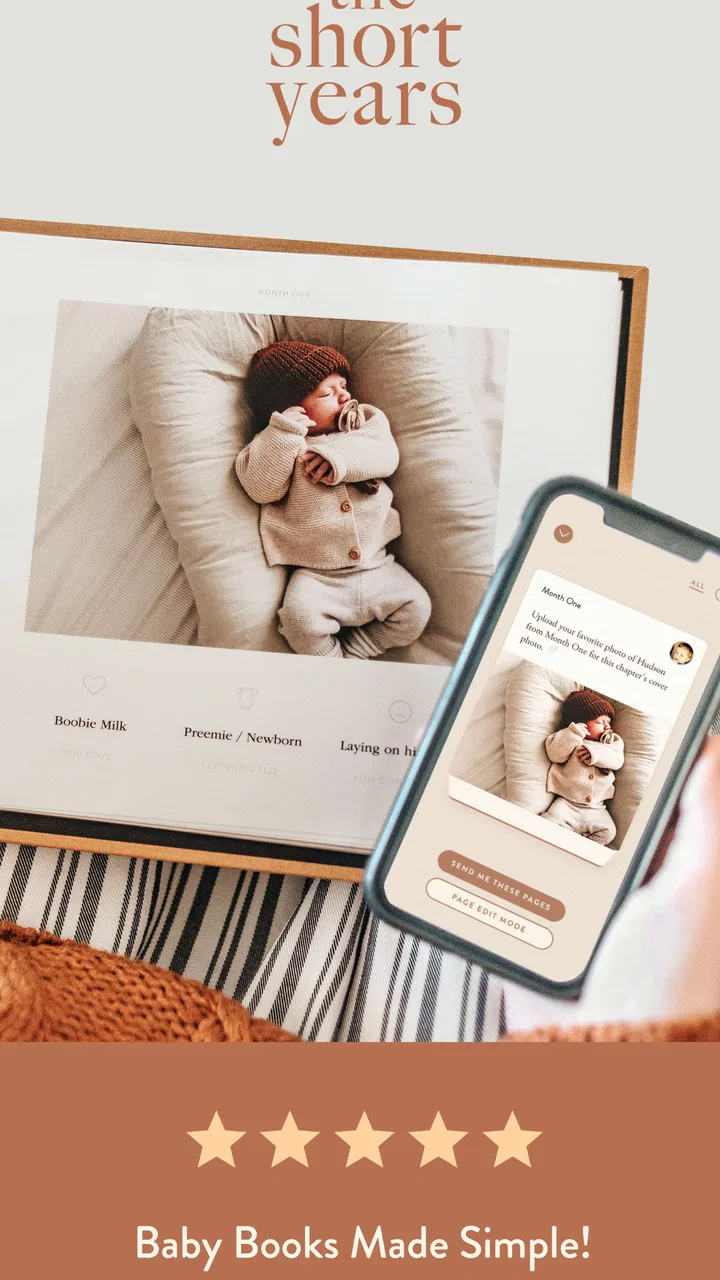
The Short Years Baby Book
- 4.7
- Rating
- 50.00K
- Installs
- Free
- Price

 Analysis by App-foxy
I have a soft spot for baby journals, but I also know how quickly a well-intentioned memory project can become another unfinished task. The Short Years Baby Book takes a more manageable approach: it is a free parenting app from Unbound Applications that helps turn small moments into a digital keepsake without asking me to write a full diary every night. Its promise is simple, but the real question is whether it still deserves attention after the first burst of enthusiasm disappears.
After spending time with it, my answer is cautiously positive. The app is at its best when I treat it as a tiny weekly ritual rather than a complete record of family life. It encourages me to capture the details I would otherwise forget, while keeping the effort small enough for a tired parent to consider realistic. It is not a replacement for a private photo library, a long-form journal, or a printed scrapbook. Instead, it sits between those options and gives ordinary memories a more intentional shape.
From five-minute curiosity to a usable family habit
I look at the first few weeks as a chance to find a rhythm, not to prove I can document everything. A useful next step is to decide what makes an entry worth keeping—perhaps a new habit, a distinctive reaction, or a detail another caregiver noticed—so choosing memories stays intentional. That approach also gives me a better lens for considering how comfortably the app fits different reading, movement, and everyday-use needs.
You May Also Like

 Blood Strike: 2.5 Anniversary
Blood Strike’s Loadouts Turn Every Drop Into a Tactical Gamble
A close look at Blood Strike’s custom loadouts: how fast access to signature weapons reshapes its battle royale rhythm, rewards preparation, and narrows the gap between fights.

 Pandora - Music & Podcasts
Pandora’s Music Is Easy to Start, but Harder to Recover
Pandora’s strength is its low-effort path from a seed to a station. Its weak spot is how much confidence it asks you to place in connection, setup, and quiet recovery.

 8 Ball Pool
 Is Built on Rivalries, Rematches, and Routine
A close look at the rivalries, rematches, shared routines, and unanswered safety questions that turn a quick pool match into a persistent mobile community.

 Samsung Music
’s Quiet Strength Is Playing What You Already Own
Its reach comes less from spectacle than from dependable access to a personal library. That simplicity is both the app’s strongest retention engine and its ceiling.

 AccuWeather: Weather Radar
AccuWeather Review: A Quick, Clear Forecast for Everyday Decisions
For everyday plans, the best forecast is the one you can understand quickly. AccuWeather makes rain timing, radar, and local conditions easy to act on, with a few trade-offs.

 Hill Climb Racing
Why Hill Climb Racing Still Turns Crashes Into One More Run
A tiny car, a bumpy hill and one more upgrade: Hill Climb Racing keeps resurfacing because its simple chaos makes every near-miss feel personal.
More From Our News Desk



The first week feels pleasantly easy
The strongest part of the experience is the low starting barrier. I do not need to plan a theme, choose a design system, or prepare a long story before beginning. The app is built around creating a baby book in brief sessions, which makes the first week feel less like a craft project and more like a small act of remembering. That distinction matters when the baby is unsettled, the household is busy, and even opening a notebook can feel like work.
I found the most natural starting point was not a major milestone. A first smile or first step sounds like the obvious material, but everyday details often make a better opening: a new sleeping habit, a funny expression, a favorite sound, or the way a child reacts to a familiar person. Those moments are easy to lose because they seem ordinary at the time. A short entry gives them a place without demanding that I turn them into a polished story.
The free price also makes experimentation comfortable. I can try the basic workflow before deciding whether it suits my family, rather than committing to a paid journal immediately. The app is rated for Everyone, and its parenting focus is clear enough for new parents who want guidance without a complicated creative tool. It runs on Android devices using at least version 6.0, so the technical entry point is not especially demanding for people using an older compatible phone.
One useful habit is to create entries while a memory is still fresh, but not necessarily at the exact moment it happens. I prefer setting aside a quiet part of the week, reviewing recent photos, and choosing only the moments that still make me smile. This prevents the book from becoming a stream of nearly identical updates. It also turns the app into a filter: instead of storing everything, I decide what is worth returning to later.
What makes the first impression different from a camera roll
A phone gallery is excellent at collecting evidence, but poor at explaining why an image mattered. I can scroll past hundreds of baby photos without remembering what happened before or after any of them. A baby book gives those images a more deliberate context. Even a brief note can transform a picture from “another bath-time photo” into a memory of a particular phase, mood, or family joke.
This is where the app feels more useful than simply creating an album in the default photo app. The gallery asks me to organize files; this app asks me to preserve a story. That is a subtle difference, but it changes what I choose to save. I am less likely to document every pose and more likely to record the small developments that show personality.
There is also a practical emotional benefit. Parents often feel pressure to remember everything, especially during the early months when changes happen quickly. A structured baby book gently narrows that expectation. I do not need a perfect archive. I need a selection that brings the period back to life. The app works well when I use it to reduce that pressure rather than create a new standard of perfection.
Where the novelty can mislead you
The first few entries can feel rewarding because the result looks more meaningful than a loose collection of notes. That early satisfaction may encourage overuse. I would resist trying to document every day unless that genuinely suits you. The more ambitious the routine becomes, the more likely it is to collapse when sleep, work, illness, or travel interrupts it.
My advice is to begin with one short session per week. If you have several good moments, save them for the same sitting instead of opening the app repeatedly. This is one of the less obvious advantages of the app’s brief-session concept: it works better as a weekly editing appointment than as a live broadcast of the baby’s life.
Month-to-month value depends on selection
After the first month, the app’s value becomes less about the act of adding an entry and more about the contrast between entries. A single memory can feel modest, but a sequence reveals change. Sleep patterns shift, expressions become recognizable, new sounds appear, and family routines settle into place. The book becomes a record of transitions rather than a pile of isolated announcements.
I especially appreciate this when looking back at moments that did not seem important at the time. A photo may show a favorite blanket, a particular hairstyle, or a temporary habit that vanished a few weeks later. Those details are often more evocative than formal milestone notes because they recreate the texture of daily life. The app gives them a home alongside the bigger events.
The recurring value is strongest for families who enjoy looking back together. A partner can use the book as a shared memory project, even if only one person does most of the writing. Relatives who live elsewhere may also appreciate a more thoughtful collection than a constant stream of individual messages. Still, I would keep privacy and family boundaries in mind before treating any digital baby book as something that should automatically be shared widely.
For separated parents, the app may also provide a useful neutral record of growth and routines, provided both adults agree on how it will be used. It is not a substitute for direct communication, but a carefully maintained book can help preserve continuity between households. The important point is to keep the entries child-centered rather than turning the journal into a running account of adult disagreements.
Three workflows that make it more sustainable
My favorite workflow is the weekly review. I look through the recent camera roll, choose a small number of images, and write one sentence about why each moment matters. This avoids the pressure to compose a literary entry. A plain sentence is enough if it captures something specific, such as a new reaction to music or a habit that appeared suddenly.
A second workflow is to use the app as a prompt for conversation. Instead of writing everything myself, I can ask another parent or relative what they noticed that week. Their observation may be different from mine, and that difference adds depth. One person may remember the child’s expression while another remembers the sound, the setting, or the family member who was present.
A third workflow is to separate recording from editing. I can jot down a quick reminder when something happens, then return later to turn it into a cleaner entry. This is useful for parents who are too busy to write at the right moment. It also reduces the temptation to stare at the screen during an event that would be better experienced directly.
These approaches reveal an important trade-off: the app cannot create meaningful memories by itself. It provides a container and a rhythm, but the quality of the book depends on the choices I make. If I add only generic captions or treat the process as a checklist, the result becomes less personal. If I include sensory details and small family context, the same simple tool becomes much more valuable over time.
How it compares with familiar alternatives
Compared with a paper baby book, this app is easier to keep nearby and less intimidating when I have only a few minutes. Paper has a tactile charm and may feel more permanent, but it can be left in a drawer, and handwritten pages are harder to revise. A digital book is more forgiving when I remember a detail later or want to correct a rushed note.
Compared with a private notes app, the baby-book format gives the project a clearer purpose. Notes are flexible, but that flexibility can become disorder. I may end up with scattered entries, inconsistent dates, and photos stored elsewhere. The Short Years approach feels more focused because I am building one coherent record rather than maintaining another general-purpose notebook.
Compared with social media, it is better suited to quiet preservation than public performance. Social platforms reward frequent posting and immediate reactions, while a personal baby book can be selective. I do not have to turn every development into an announcement. That makes it a better fit for parents who want a keepsake without putting family life on display.
Photo-printing services may be preferable for someone who wants a physical album as the main outcome. They can produce a polished object, but they usually require more deliberate design and a separate commitment to selecting, arranging, and ordering images. This app is more convenient for maintaining the story as life unfolds, although a printed book may still be the better final destination for a special collection.
The maintenance burden is small, but it is real
The app’s main maintenance requirement is consistency. Five minutes sounds harmless, yet even a short weekly task can disappear when routines change. I found that attaching it to an existing habit works better than relying on motivation. For example, I might review the week after organizing photos or during a calm weekend moment. The exact timing matters less than making the action predictable.
Another source of effort is choosing what not to include. A baby’s early months generate more material than any reasonable book can hold. If I save everything, the project becomes repetitive and harder to revisit. If I save too little, I may later wish I had captured the ordinary details. The right balance is not a fixed number of entries; it is a clear personal rule, such as choosing moments that show change, personality, or family connection.
I also recommend writing for your future self rather than for an imagined audience. A caption that sounds polished can still be vague. “A lovely day” will mean less later than a concrete note about the toy that caused a laugh or the unusual way the child reacted to a familiar voice. Specificity is the hidden feature of any memory app: the software can organize the record, but only the writer can make it recognizable.
Parents should also decide early whether they want one shared book or separate records from different caregivers. A shared approach is simpler and can create a fuller picture, while separate notes may preserve different perspectives. The app is most useful when the household agrees on the purpose. Without that agreement, one person may see it as a keepsake and another as an obligation.
Where fatigue starts to appear
The first kind of fatigue is repetition. Babies change quickly, but not every day produces a distinct story. If I force myself to write on a rigid schedule, entries can start sounding alike. Skipping a week is healthier than filling the book with low-value updates simply to maintain a streak that the family does not actually enjoy.
The second kind is emotional comparison. Looking back at other families’ carefully curated memory books can make a personal record feel inadequate. I would avoid treating the app as a design competition. Its lasting value comes from authenticity, not from producing a flawless timeline. A messy week, a short caption, or an unremarkable photograph may still become meaningful because it reflects real life.
The third is device dependence. A digital record is convenient, but it relies on continued access to the app and the device where it is maintained. That does not make it a poor choice, but it does mean I would not treat one app as the only copy of irreplaceable photos or stories. Important memories deserve a broader personal backup strategy, regardless of which journaling tool I use.
There is also a financial consideration. The app is free to start, while in-app purchases are listed at $7.99 per item. That makes it easy to test, but anyone planning a larger collection should think about which optional purchases genuinely improve the finished keepsake. I would first establish a routine with the free experience, then decide whether paying adds enough value to justify the expense.
Who should use it, and who should skip it
I would recommend it to parents who want more structure than a camera roll but less work than a handcrafted scrapbook. It is especially suitable for people who like short reflective routines, enjoy selecting meaningful photos, and want a record that can grow gradually. It may also suit grandparents or relatives who want to contribute observations without maintaining a full traditional journal.
I would be less enthusiastic for someone who wants instant automation. If your ideal system is one that quietly collects everything in the background, a memory book may feel too dependent on your own attention. Likewise, people who strongly prefer paper, dislike writing on a phone, or want a professionally printed album immediately may be happier with a physical alternative.
It may not be the right choice for parents who feel overwhelmed by memory-keeping altogether. Even a brief weekly routine can become guilt-inducing if it is added to an already crowded list. In that situation, a simple folder of favorite photos and an occasional note may be kinder and more sustainable. A keepsake should support family life, not become another way to measure whether you are doing enough.
My long-term verdict
Unbound Applications has made a sensible parenting app for a very specific problem: meaningful memories are easy to collect badly and difficult to preserve intentionally. The Short Years Baby Book gives those memories a focused place and encourages a manageable rhythm. Its average rating of 4.7 from over 300 ratings suggests that the concept resonates with many users, and its install base has passed 50 thousand, which gives it a reassuring level of real-world interest without changing the fact that the experience remains personal.
The current version is 9.20, and the app has been available since July 16, 2018. Those details matter less than the habit it supports, but they do show that this is not merely a fleeting novelty. Still, longevity for the user depends on discipline. The app earns lasting space on my phone only when I keep the process selective, accept occasional gaps, and write details that will mean something later.
My final recommendation is to try it with a deliberately modest goal: one short session each week for a month. Do not begin by attempting a complete history of every milestone. Choose a few images, add context that a gallery cannot provide, and see whether you enjoy returning to the result. If the book starts to feel like a burden, reduce the frequency rather than abandoning it immediately.
The lasting value is not in recording more; it is in remembering better. For parents who want a gentle bridge between scattered photos and a formal scrapbook, this free app is worth trying. It will not remove the work of choosing and reflecting, and its optional purchases mean the long-term cost can rise beyond the initial download. But when used as a small, sustainable ritual, it can preserve the ordinary moments that most often disappear—and those are frequently the memories I am happiest to find again.
FAQs for The Short Years Baby Book
01What is The Short Years Baby Book?
The Short Years Baby Book is a digital memory-keeping app designed to help parents record and organize special moments from pregnancy, a baby’s first year, and early childhood. It provides guided prompts and spaces for photos, milestones, stories, and personal notes, making it easier to create a meaningful family record without having to design a scrapbook from scratch.
02How does The Short Years Baby Book work?
After creating an account, parents can add information about their child, upload photographs, and respond to prompts covering important developmental stages and everyday memories. The app organizes entries into a structured digital book, so users can gradually build the story over time. Its guided format is particularly useful for parents who want to document memories but are unsure what details to include.
03Can I use The Short Years Baby Book without being a professional photographer or designer?
Yes. The Short Years Baby Book is intended for everyday parents and does not require photography, editing, or design experience. You can use pictures taken with a phone and write as much or as little as you like. The prompts provide direction, while the organized layout helps create a polished-looking memory book even if you have limited time or creative experience.
04Is my baby’s information and photo content private in The Short Years Baby Book?
Before uploading personal photographs or information about your child, it is important to review the app’s current privacy policy, account settings, and data-storage practices. Check whether content is stored online, how it may be shared, and what options are available for deleting your account or exporting memories. Avoid posting sensitive information publicly and use a strong, unique password for your account.
05Is The Short Years Baby Book free to download and use?
The availability of features, subscriptions, and book-related services may depend on the current version of The Short Years Baby Book and your location. Some functions may be accessible at no cost, while additional templates, storage, printing, or premium options could require payment. Check the app-store listing and in-app pricing before starting, especially if you plan to create a printed keepsake.
Pros
- Simple design makes it easy to record milestones quickly.
- Keeps photos and memories organized in one dedicated place.
- Useful prompts can inspire parents to document everyday moments.
- Creates a meaningful digital keepsake for a child’s early years.
- Suitable for parents who prefer guided memory journaling.
Cons
- Some features may require in-app purchases or a subscription.
- Limited customization may not suit parents wanting a unique layout.
- Entering memories regularly can become time-consuming.
- Cloud backup and export options may be limited or unclear.
- Privacy-conscious users may have concerns about storing family photos online.

The Short Years Baby Book
Gallery